6 Ways to Prepare a Garden for a Summer Party
Learning how to prepare a garden for a summer party transforms an overgrown plot into an outdoor room where guests linger past twilight. The smell of sun-warmed thyme underfoot, the cool shade of a strategically pruned tree canopy, and beds that draw the eye without snagging conversation all emerge from deliberate decisions made weeks before the event. These six preparation strategies balance soil biology, structural editing of plant mass, and microclimate control to produce a garden that functions as entertainment space.
Materials
Garden preparation demands inputs calibrated to existing soil chemistry. Begin with a soil test measuring pH, cation exchange capacity, and baseline NPK levels. Most ornamental borders benefit from a balanced 4-4-4 organic meal applied at 2 pounds per 100 square feet four weeks before the event. This slow-release formulation supports steady auxin distribution without forcing excessive vegetative growth that demands corrective pruning days before guests arrive.
For lawns showing chlorosis, apply iron sulfate at 3 ounces per 1,000 square feet to acidify pH from 7.2 to 6.8, the range where mycorrhizal fungi colonization peaks. Mulch requires two cubic yards per 500 square feet of bed space, selecting aged hardwood bark with particle size between 1/2 and 3/4 inch. This dimension suppresses germinating weed seeds while permitting gas exchange at the soil surface.
Hardscape cleaning demands trisodium phosphate solution at 1/4 cup per gallon for stone pavers. Wooden structures require oxygen bleach at manufacturer-specified dilution rates to remove algae without disrupting lignin structure.
Timing
Hardiness zones dictate preparation windows. Zone 7 gardeners begin structural work 8 weeks before the event date, typically mid-April for late-June gatherings. Zone 5 schedules shift to early May for July parties, aligning with last frost dates that average May 15.
Herbaceous perennial division occurs 6 weeks out, allowing root establishment before bloom cycles peak. Shrub pruning follows a 4-week lead time. This interval permits wound callusing and prevents the flush of epicormic shoots that create visual clutter. Annual color installation happens 10 days before the party, timing transplant shock recovery with bud break.
Lawn renovation requires 12 weeks for seed establishment or 3 weeks for sod knitting. The mycorrhizal network supporting turfgrass roots achieves functional density only after 60 days of active growth, making spring preparation non-negotiable for summer events.
Phases
Sowing
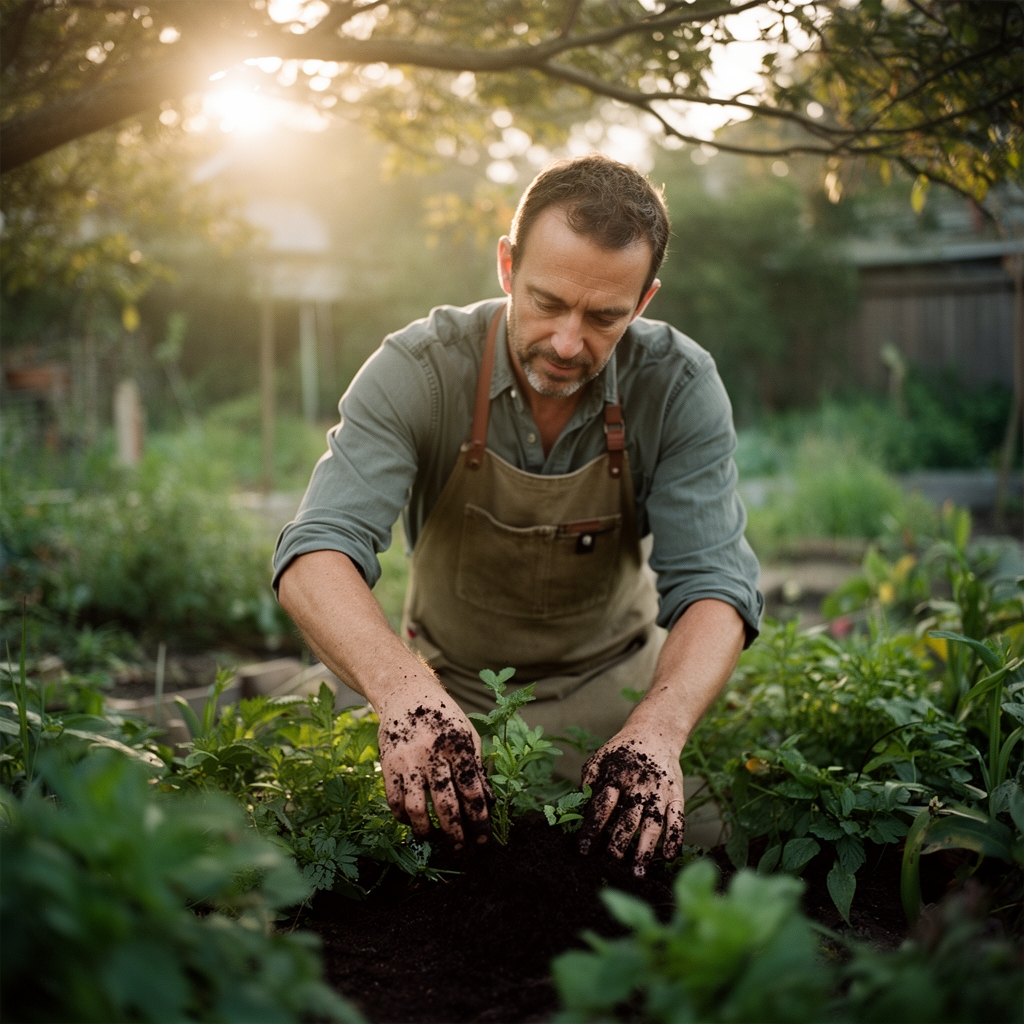
Direct-sow fast-maturing annuals like sweet alyssum (Lobularia maritima) 6 weeks before the party date. Prepare beds by incorporating compost at 2 inches depth, then broadcast seed at 10 seeds per square inch. Germination occurs within 7 days at soil temperatures above 60 degrees Fahrenheit. Thin seedlings to 6-inch spacing once true leaves emerge.
Pro-Tip: Inoculate annual beds with Rhizophagus irregularis at 0.5 grams per plant hole. This arbuscular mycorrhizal species increases phosphorus uptake by 40 percent, accelerating bloom development.
Transplanting
Install containerized perennials and annuals 10 days pre-event during overcast conditions or after 4 PM to minimize transpiration stress. Dig holes 1.5 times root ball width. Score container-bound roots with vertical cuts 1/4 inch deep at four cardinal points to disrupt circling patterns that limit establishment.
Backfill with native soil. Synthetic amendments alter water-holding capacity, creating perched water tables at the interface between foreign and native media. Water each transplant with 1 gallon immediately after installation.
Pro-Tip: Apply diluted seaweed extract (1:100 ratio) at transplanting. The cytokinin content reduces ethylene production, minimizing shock-related leaf drop.
Establishing
Maintain soil moisture at field capacity for 14 days post-transplant. Install temporary shade cloth providing 30 percent light reduction over new installations during establishment. Remove coverings 5 days before the party.
Prune dead, diseased, or crossing branches from woody plants. Make cuts 1/4 inch above outward-facing buds at 45-degree angles. This approach directs new growth away from pathways while promoting wound closure through optimized vascular cambium exposure.
Pro-Tip: Remove spent flowers daily during the week before the event. This prevents auxin signals that redirect carbohydrates from bud formation to seed production.
Troubleshooting
Symptom: Powdery white coating on zinnia and phlox foliage.
Solution: Apply sulfur fungicide at 3 tablespoons per gallon weekly. Increase plant spacing to 18 inches to improve air circulation and reduce relative humidity at leaf surfaces.
Symptom: Brown patch in lawn, circular areas 6 to 24 inches diameter.
Solution: Reduce nitrogen inputs. Apply azoxystrobin at labeled rates. Water deeply (1 inch) once weekly rather than daily shallow irrigation that favors Rhizoctonia solani.
Symptom: Aphid clusters on rose terminals and buds.
Solution: Spray insecticidal soap at 5 tablespoons per gallon, ensuring contact with insect bodies. Repeat every 5 days for three applications.
Symptom: Wilting despite adequate soil moisture, vascular browning in stems.
Solution: Verticillium wilt requires plant removal. Solarize affected soil with clear plastic for 6 weeks at 4-inch depth reaching 140 degrees Fahrenheit.
Maintenance
Water established beds with 1 inch per week, delivered in a single session to encourage deep rooting. Measure depth by placing tuna cans at irrigation perimeter. New transplants require 1 gallon every 3 days for 2 weeks.
Edge beds 3 days before the party, cutting 2 inches deep to create crisp boundaries. Mow lawns 2 days out at 3-inch height, removing no more than one-third of blade length.
Deadhead spent blooms daily during the final week. Sweep hardscapes the morning of the event.
FAQ
When should I start preparing my garden for a summer party?
Begin 8 to 12 weeks before the event date, depending on hardiness zone and existing garden condition.
What is the best grass height for entertaining?
Maintain cool-season grasses at 3 inches and warm-season types at 2.5 inches for optimal wear tolerance.
How do I quickly improve garden appearance?
Apply 2 inches of fresh mulch, edge all beds, and install annual color in high-visibility areas 10 days before the event.
Can I transplant in summer heat?
Transplant only during early morning or evening hours. Provide temporary shade and daily watering for 14 days.
How do I prevent lawn damage from foot traffic?
Irrigate to field capacity the day before the event. Moist soil compacts less than dry or saturated conditions.