7 Best Heavy-Duty Shovels for Rocky Ground
Breaking compacted soil and moving aside stone is labor that tests both tool and user. The best heavy-duty shovels for rocky ground combine high-carbon steel blades, reinforced socket connections, and handle materials that absorb shock without splintering. Standard consumer shovels fail when blade edges fold against granite or when socket welds crack after repeated percussion. Professional excavation in lithic soils demands implements rated for pry-bar lateral stress, not merely vertical thrust.
Materials
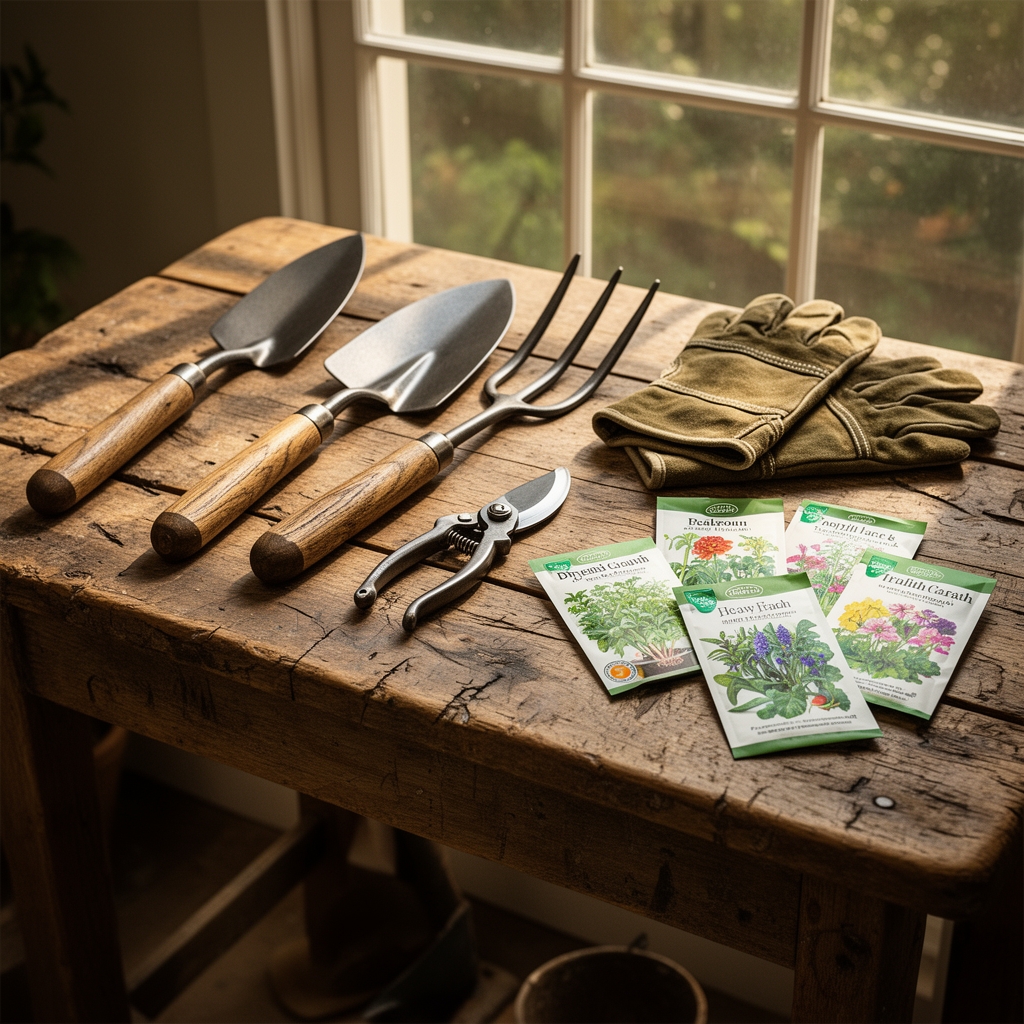
Blade composition determines edge retention and flexibility. High-carbon steel (1055 or 1065 grade) holds a sharp bevel through abrasive contact with quartz and feldspar. Tempered to Rockwell 48-52, these blades resist chipping yet retain enough elasticity to prevent catastrophic failure under lateral load. Stainless steel variants (304 or 430) resist corrosion in saline or acidic soils but sacrifice edge hardness.
Socket engineering is the structural weak point. Forged one-piece construction eliminates weld failures. A closed-back socket distributes torque across a larger surface area than open-back designs. The optimal socket length is 8 to 10 inches, providing sufficient bonding surface with the handle tang.
Handle materials fall into three categories. Ash and hickory (moisture content 8-12%) offer superior shock absorption and a modulus of elasticity near 1.5 million psi. Fiberglass-reinforced polymer composites tolerate moisture cycling without dimensional change but transmit more vibration. Steel handles, often found in military entrenching tools, offer maximum strength at the cost of user fatigue.
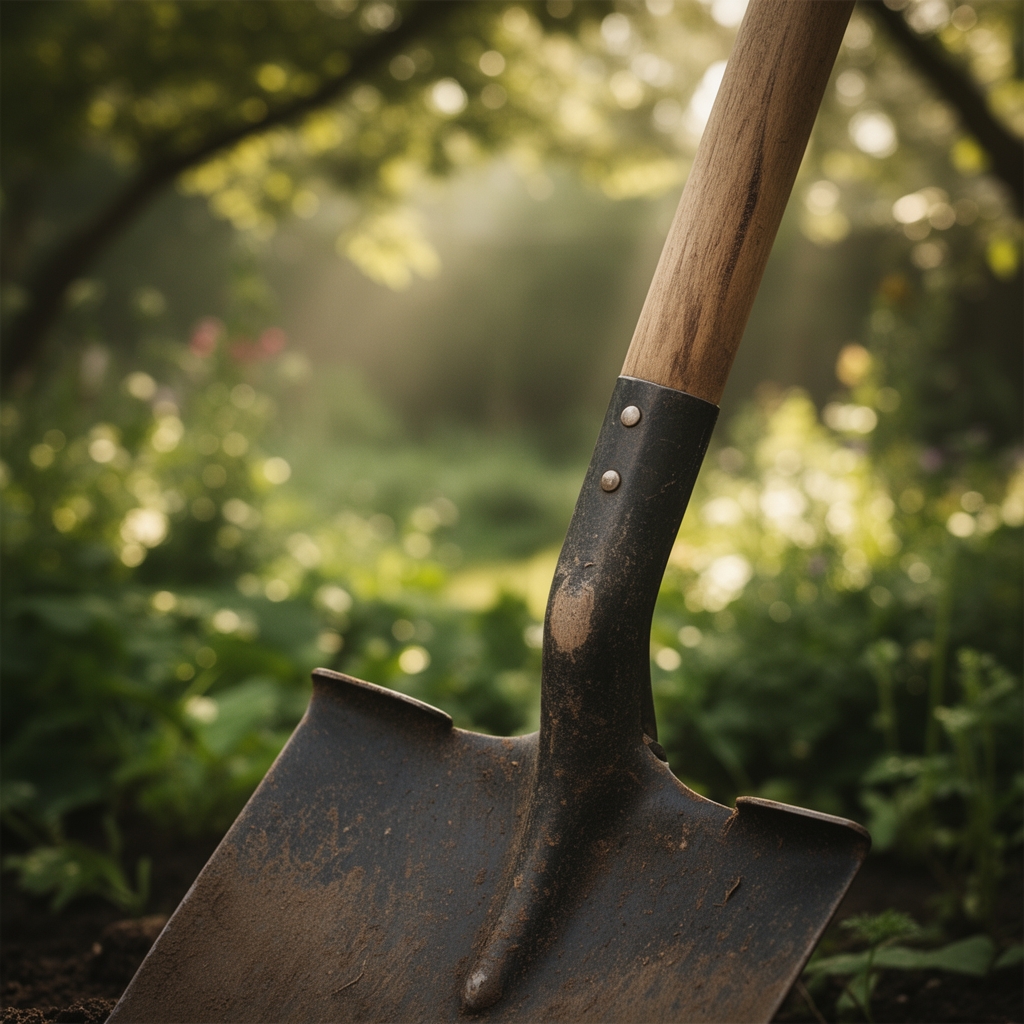
Blade geometry affects penetration and leverage. A forward-turned step (the tread) allows body weight to drive the blade into compacted substrate. Blade width of 7.5 to 9 inches balances soil volume per lift against the force required to penetrate clay-locked cobbles. A pointed tip (drain spade pattern) splits dense material more efficiently than a rounded profile.
Timing
Rocky ground work aligns with frost-free periods when soil aggregates separate naturally. In USDA Hardiness Zones 4-6, begin excavation two weeks after the last spring frost date, once soil temperature at 6-inch depth reaches 50°F. Frozen ground magnifies impact stress, accelerating handle fracture.
In Zones 7-9, winter months offer ideal conditions. Reduced soil moisture increases shear strength, making it easier to isolate and remove embedded stone. Soil at field capacity (approximately 50% saturation) adheres to the blade, reducing efficiency by 30%.
Clay-heavy lithic soils benefit from pre-wetting 48 hours before excavation, allowing moisture to penetrate capillary spaces and reduce cohesion. Sandy-gravelly substrates require no pre-treatment.
Phases

Initial Penetration
Position the blade at 70 degrees to the horizontal plane. Drive downward using body weight concentrated through the tread. Avoid pure vertical insertion, which maximizes resistance. A rocking motion parallel to the blade axis levers apart aggregate structures.
Pro-Tip: Apply powdered graphite to the blade face before work. Friction coefficients drop from 0.6 to 0.4, reducing adhesion of wet clay by 25%.
Stone Isolation
Once blade depth reaches 8 inches, shift to lateral prying. Insert the blade alongside the obstruction, using the handle as a class-one lever. Fulcrum placement at 12 inches from blade tip generates optimal mechanical advantage without over-stressing the socket.
For stones exceeding 40 pounds, excavate a perimeter trench 6 inches wide. This exposes lateral surfaces and reduces suction from surrounding fines.
Pro-Tip: Wet the stone surface with water. Capillary tension between blade and stone decreases, preventing the shovel from binding during extraction.
Material Removal
Lift with legs, not lumbar muscles. A 10-pound soil load at 36 inches from the pivot (user's hip) generates 360 inch-pounds of torque on the lower spine. Shorten the moment arm by sliding the lower hand to within 18 inches of the blade.
Pro-Tip: Remove no more than 4 pounds of soil per lift when working above shoulder height. Fatigue-related socket failures increase exponentially after 60 minutes of overhead work.
Troubleshooting
Symptom: Blade edge rolling or mushrooming after contact with stone.
Solution: Blade temper is too soft (below Rockwell 45). Re-harden edge with oxy-acetylene torch to cherry-red (1400°F), then quench in oil. Alternatively, grind the damaged edge to 30-degree bevel and sharpen with a mill file at 20 degrees per side.
Symptom: Handle cracking at socket junction.
Solution: Grain orientation is incorrect. Replace handle with straight-grained ash in which annual rings run parallel to the handle axis. Apply boiled linseed oil monthly to maintain 10% moisture content.
Symptom: Excessive soil adhesion to blade face.
Solution: Surface oxidation increases friction. Polish blade with 220-grit aluminum oxide, then coat with paste wax or silicone spray. Reapply every 4 hours during wet-soil excavation.
Symptom: Socket rotation or loosening.
Solution: Handle tang diameter is undersized. Wrap tang with fiberglass cloth saturated with epoxy resin before reinserting. Alternatively, drill and pin socket through handle with a 3/16-inch steel dowel.
Symptom: User fatigue within 20 minutes.
Solution: Handle length is incorrect. Optimal length equals user height minus 12 inches, ensuring the grip falls naturally at hip level. Excessive length increases moment arm and muscular load.
Maintenance
Sharpen blade edges every 8 hours of use. A 10-degree microbevel on the primary 30-degree edge improves penetration without sacrificing durability. Use a 10-inch mill bastard file, pushing away from the body at 20 strokes per inch of edge.
Clean soil residue within 15 minutes of completing work. Dried clay forms a hygroscopic layer that accelerates corrosion. Rinse with water, dry with a cloth, then apply a thin film of 3-IN-ONE oil.
Store shovels vertically or suspended. Horizontal storage on concrete wicks moisture into wooden handles through capillary action, promoting fungal decay. Maintain storage humidity between 40-50%.
Inspect socket welds monthly under 10x magnification. Hairline cracks propagate rapidly under cyclic loading. Grind out cracks to bare metal and re-weld using 7018 electrodes at 90 amps.
Wooden handles require annual oil treatment. Apply boiled linseed oil (three coats, 24 hours apart) to maintain lignin plasticity and prevent moisture cycling damage.
FAQ
What blade length works best in rocky soil?
A 12-inch blade provides sufficient surface area for leverage without excessive weight. Longer blades (14-16 inches) increase moment load on the socket, raising failure risk.
Can I use a round-point shovel instead of a square-point?
Round-point (or pointed) shovels concentrate force on a smaller area, improving penetration in compacted lithic soils. Square-point designs excel in loose aggregate but fold when striking stone edges.
How much should a heavy-duty shovel weigh?
Total implement weight should fall between 5.5 and 7 pounds. Lighter tools lack momentum for penetration; heavier tools accelerate fatigue and reduce swing frequency.
Is fiberglass stronger than wood for handles?
Fiberglass offers higher tensile strength (90,000 psi vs. 15,000 psi for ash) but transmits 40% more vibration to hands and wrists. Wood handles absorb shock through cellular compression, reducing repetitive strain injuries.
How often should I replace a shovel?
Replace when blade thickness at the edge measures less than 2mm, when socket exhibits visible cracks, or when handle shows cross-grain fractures. Average lifespan in professional rocky-ground excavation is 200-300 hours of use.