7 Best Grow Bags for Indoor Potato Growing
The soil inside a grow bag warms faster than garden earth, and potato tubers respond by accelerating meristem division in the first fourteen days after planting. Choosing the best grow bags for indoor potato experiments means balancing fabric breathability, gallon capacity, and drainage architecture to prevent anaerobic pockets that trigger soft rot. A 10-gallon nonwoven polypropylene bag with reinforced handles allows enough vertical space for hilling while maintaining the cation exchange capacity needed for steady potassium uptake during tuber bulking.
Materials
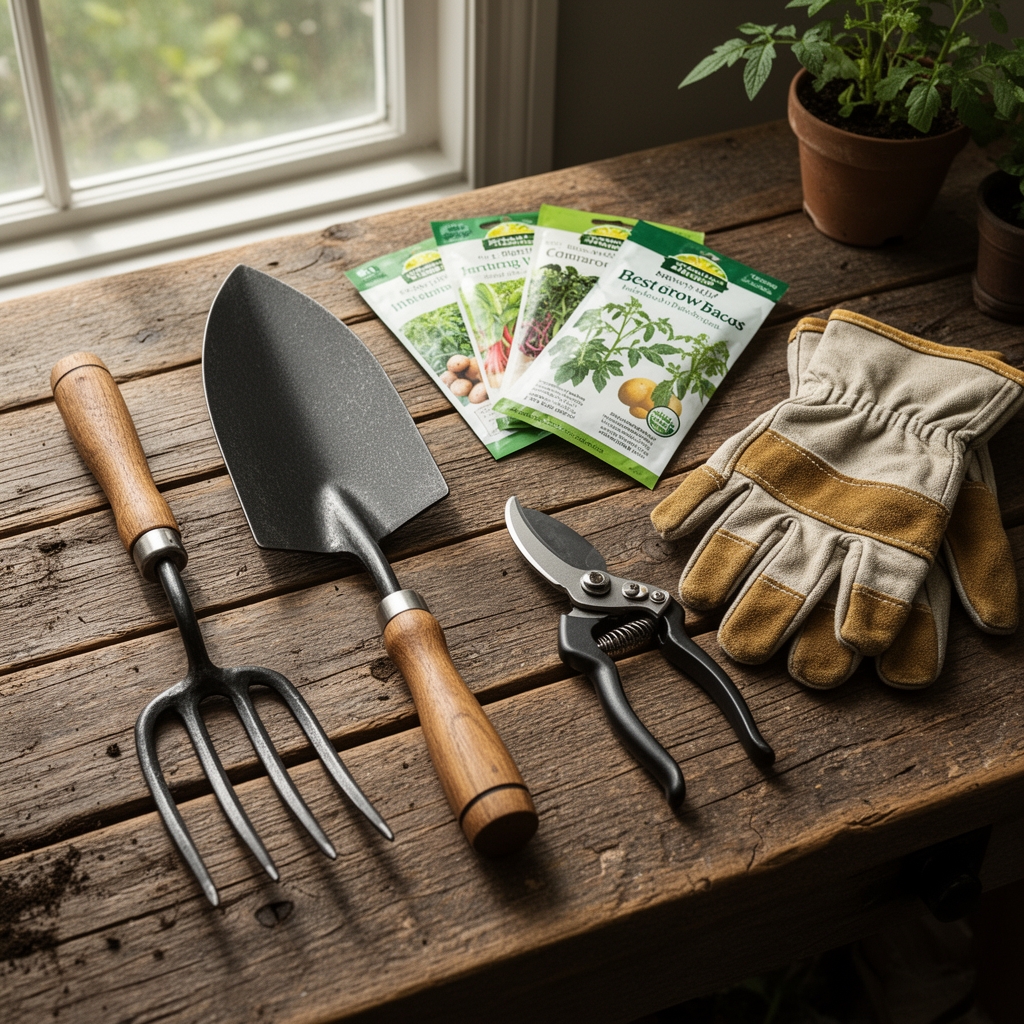
Select nonwoven polypropylene bags rated at 10 to 15 gallons. Fabric density should fall between 200 and 300 grams per square meter to permit air pruning of lateral roots without excessive evaporation. Handles must support at least 50 pounds when the medium is saturated.
Substrate begins with a 60:30:10 blend of peat moss, perlite, and finished compost. Target pH sits between 5.0 and 6.0 to minimize scab lesions caused by Streptomyces species. Incorporate a 4-4-4 organic meal at 2 tablespoons per gallon of medium. This ratio supplies nitrogen for early foliage while reserving phosphorus for root expansion and potassium for starch synthesis. Add 1 tablespoon of dolomitic limestone per 5 gallons to buffer pH drift and provide magnesium for chlorophyll production.
Inoculate the mix with Rhizophagus irregularis at 5 grams per bag. Mycorrhizal fungi colonize root hairs within 10 days and extend phosphorus acquisition by up to 400 percent in container systems. Avoid high-phosphorus fertilizers during establishment, as excess orthophosphate inhibits hyphal penetration.
Timing
Indoor cultivation decouples potato production from hardiness zones, but photoperiod still governs tuber initiation. Solanum tuberosum cultivars initiate tubers when day length drops below 12 hours or when far-red light ratios shift. Replicate short-day conditions by restricting grow lights to 10 hours per day starting in week six.
Begin experiments 8 to 10 weeks before the desired harvest window. Seed potatoes require 10 to 14 days of chitting at 60 to 65 degrees Fahrenheit under indirect light to wake apical buds. Plant when sprouts reach 0.5 to 1 inch. Maintain air temperature between 60 and 70 degrees Fahrenheit; tuber set ceases above 80 degrees Fahrenheit due to auxin redistribution away from stolon tips.
Phases
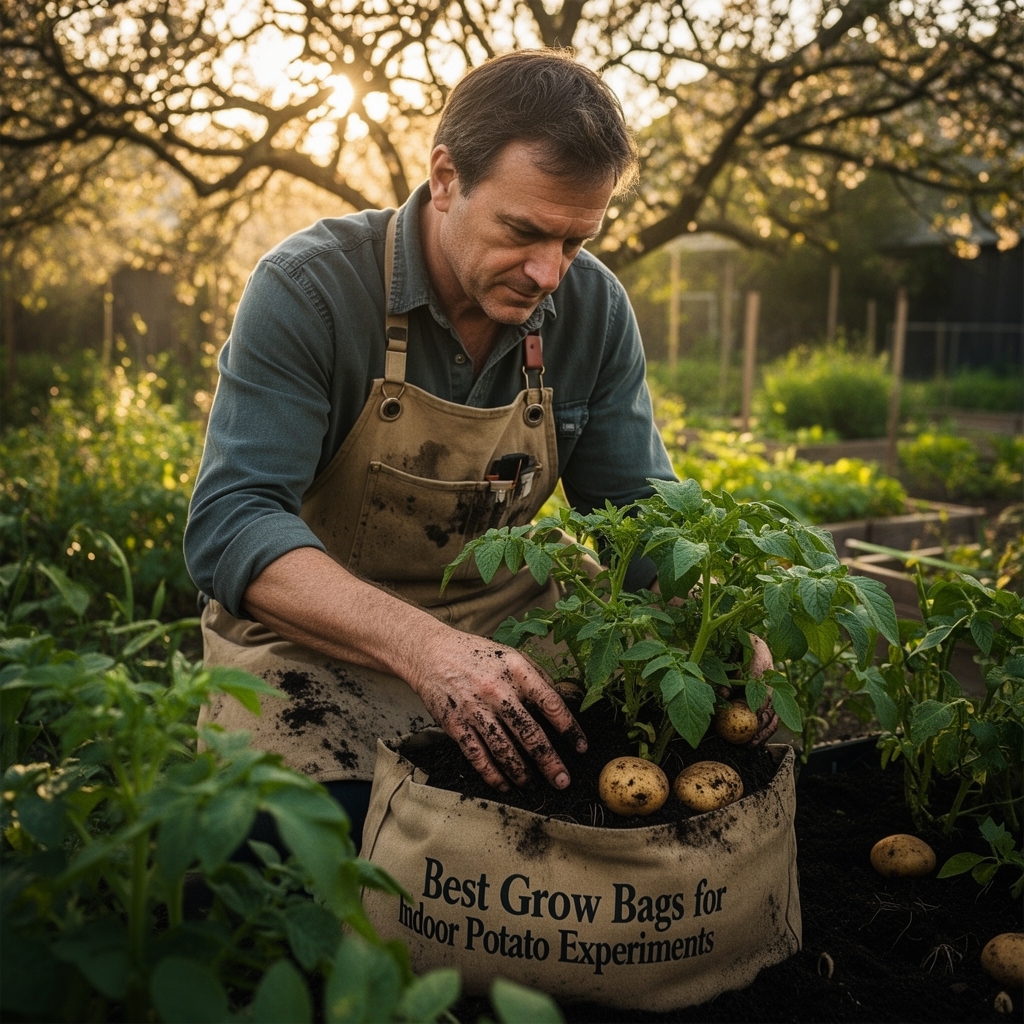
Sowing: Place a single seed potato at 4 inches depth with sprouts facing upward. Cover with 3 inches of medium, leaving the top 7 inches of the bag empty for later hilling. Water until the drainage layer releases 10 percent of input volume. Excess moisture during the first week leaches calcium and invites Pythium aphanidermatum.
Pro-Tip: Dust cut seed pieces with sulfur powder at 1 gram per piece to seal the wound and prevent bacterial soft rot during the lag phase.
Transplanting: Indoor systems bypass transplanting, but if moving seedlings from cell trays, handle only by the root ball. Stem bruising releases ethylene, which delays stolon differentiation by 5 to 7 days.
Establishing: When shoots reach 6 inches, add 2 inches of medium to bury the lower third of the stem. This hilling stimulates adventitious stolon formation along buried nodes. Repeat every 10 days until the bag is filled. Each hilling event increases yield potential by 15 to 20 percent by multiplying tuber sites.
Pro-Tip: Mix diatomaceous earth at 1 tablespoon per gallon into hilling medium to deter fungus gnat larvae, which sever fine feeder roots and reduce nutrient uptake efficiency by 12 percent.
Troubleshooting
Symptom: Chlorotic leaf margins with necrotic spots. Solution: Potassium deficiency. Drench with a 0-0-10 liquid fertilizer at 1 tablespoon per gallon every 7 days. Potassium competes with magnesium at uptake sites, so monitor for interveinal yellowing and apply Epsom salt foliar spray at 1 teaspoon per quart if symptoms spread.
Symptom: Hollow heart in harvested tubers. Solution: Uneven irrigation causing rapid cell expansion. Maintain consistent soil moisture at 60 to 70 percent field capacity. Install a moisture meter and irrigate when readings drop below 5 on a 10-point scale.
Symptom: Corky scab rings on tuber skin. Solution: pH above 6.5. Amend with elemental sulfur at 1 teaspoon per gallon and retest after 14 days. Streptomyces scabies thrives in alkaline conditions and competes poorly below pH 5.2.
Symptom: Wilting despite moist substrate. Solution: Verticillium wilt. Remove affected plants immediately. Sterilize bags with 10 percent bleach solution and discard contaminated medium. Verticillium dahliae persists in fabric pores for 18 months.
Maintenance
Apply 0.25 inch of water every 2 days during vegetative growth. Increase to 0.5 inch per day during tuber bulking, weeks 8 through 12. Subsurface drip emitters placed at 3 inches depth reduce foliar wetness and eliminate late blight risk.
Feed with 1-2-2 liquid fertilizer at half strength every 14 days. Cease nitrogen applications 3 weeks before harvest to harden skin and improve storage longevity. Excess nitrogen prolongs canopy growth and delays tuber maturation by up to 10 days.
Prune lower leaves that yellow naturally after week 9. This redirects carbohydrate partitioning toward tubers and improves airflow to prevent Botrytis cinerea colonization on senescent tissue.
FAQ
How long until harvest?
70 to 90 days from planting, depending on cultivar. Early varieties like 'Yukon Gold' mature in 70 days; late cultivars like 'Russet Burbank' need 90.
Can I reuse grow bags?
Yes. Wash with 5 percent hydrogen peroxide solution, rinse thoroughly, and air-dry for 48 hours. Inspect seams for mold before storage.
What size bag for fingerlings?
7 gallons suffices. Fingerling cultivars produce smaller stolons and require 30 percent less rooting volume than russet types.
Do I need supplemental light?
Yes. Provide 200 to 300 foot-candles during vegetative growth using full-spectrum LEDs. Tuber initiation occurs in darkness, so light intensity during bulking has minimal effect on yield.
Why are my tubers green?
Light exposure triggers solanine synthesis. Hill medium to cover all developing tubers and ensure bags are opaque. Solanine concentrations above 20 mg per 100 g render tubers bitter and mildly toxic.